For the competitive landscape of 2026, where speed and precision are the ultimate tie-breakers, Thai businesses must evolve from basic management to "Precision Proactive Management." This requires using an ERP system as the digital infrastructure that connects every gear of the business.
3 Warning Signs: When Should You Switch to an ERP?
Manual Bottlenecks: As an organization scales and staff numbers grow, tools that worked well in the beginning—manual data entry, basic accounting software, or siloed programs—start to become "bottlenecks" that visibly drag down overall efficiency.
Hidden Costs of Human Error: Manual data entry carries an average error risk of 1–3%. While that sounds small, in a multi-million baht business, these minor slips turn into massive "leaking revenue" that often goes unnoticed.
Business Blindness (Delayed Visibility): Without a centralized data system, executives cannot see the company's true status in real-time. The data you receive is often "the past"—two weeks old or post-month-end closing—making strategic decisions slow and reactive.
Odoo ERP solves these issues by consolidating everything into a single software hub. Data is connected in real-time: for example, when a salesperson in Chiang Mai closes an order, inventory in the warehouse is reserved instantly, a tax invoice is automatically generated in the accounting system, and executives can view the figures on a dashboard anytime, anywhere.
Reasons Why Modern Thai Enterprises Need an ERP
Switching to an ERP isn't just buying software; it’s "laying the foundation for scaling." Here are the tangible reasons:
Single Source of Truth: Say goodbye to inter-departmental conflict. Everyone sees the same real-time data, reducing arguments and increasing confidence across the board.
Automation to Reduce Hidden Costs: The system handles repetitive tasks, such as auto-invoicing or low-stock alerts, allowing your team to focus on strategic work.
Compliance and Data Security: With stricter PDPA and e-Tax regulations, a standardized ERP ensures data is organized, secure, and 100% traceable.
Data-Driven Decision Making: Shift from "gut feeling" to "hard data." Analyze project profitability or customer behavior at your fingertips.

Odoo: A Strategic Weapon for Success
1. The Perfect Balance (Customization vs. Standard)
Most ERPs fall into two camps: too rigid to change or flexible but excessively expensive. Odoo closes this gap with its Modular Approach.
Why it fits: You pick only the features you need and can adjust workflows (like approval hierarchies) to fit your culture without breaking the core structure.
With 70+ core apps and 40,000+ community modules, most customization is "Low-code/No-code," potentially reducing development costs by 50% compared to other global ERPs.
2. Limitless Scalability
Whether you start with 5 employees or grow to 1,000, Odoo grows with you.
Why it fits: It supports multi-company and multi-currency management in one system. When you expand into manufacturing or HR, you simply "turn on" the module without rebuilding the system. Currently, Odoo supports over 16 million users worldwide.
3. Thai Localization and Global Security
In 2026, Thai tax and PDPA regulations are fully digital and strictly enforced.
Why it fits: Odoo supports the Thai language and Thai Localization (VAT 30 reports, Withholding Tax, e-Tax Invoice & e-Receipt, and PromptPay/Mobile Banking integration). It also connects to e-commerce giants like Shopee and Lazada.
Security: Meets ISO 27001 and GDPR standards (the blueprint for Thailand’s PDPA).
The Success Formula: 3 Things to Prepare Before Transitioning to Odoo ERP
An ERP is only as powerful as its foundation. To ensure your Odoo investment pays off quickly, prepare these three areas:
1. Define Clear Business Needs:
Odoo’s strength is its modularity, but a common mistake is trying to launch every feature at once. Identify your biggest bottlenecks first (e.g., syncing Accounting with Stock) and start there.
2. Clean Your Data:
Precision depends on quality. Ensure your Master Data—SKUs, vendor lists, and customer info—is accurate before importing. "Clean data" significantly shortens implementation time.
3. Build a Digital-First Mindset
The biggest hurdle isn't technology; it's the fear of change. Odoo’s intuitive UX/UI is designed to feel like a "helper" rather than a "burden." When the team sees that Odoo finishes their work faster, adoption happens naturally.
Is it Time to Upgrade?
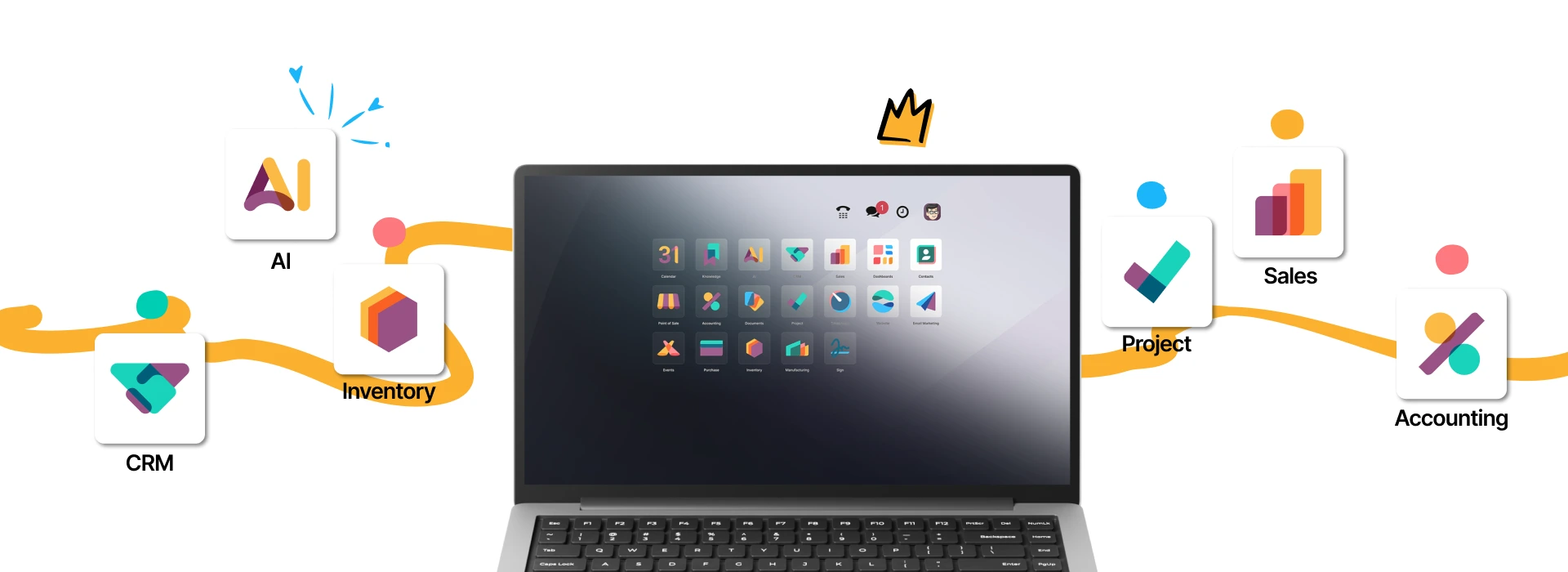
When comparing Odoo to other systems, look beyond the "software price tag." Look at the value added by giving time back to your team and precision back to your leadership.
2026 is not the year for trial and error with rigid systems. Choose a technology ready to grow with your vision.