HETTIGODA INDUSTRIES PVT LTD
The Company:
Hettigoda Industries was established in 1971 by Deshabandu Dr. Victor Hettigoda and has since grown to become the leading manufacturer of Ayurvedic products in Sri Lanka. The company’s extensive portfolio includes over 150 different products ranging from herbal remedies and pharmaceuticals to personal care items. These products have gained significant international reach and are currently exported to more than 25 countries worldwide.
Pre-Implementation Context:
Initially, the company relied on a combination of general ERP solutions and applications built by an in-house development team. However, these systems suffered from significant operational inefficiencies. To address this, top management decided to transition to an industry-standard ERP system.
In 2021, Odoo (version 14) was implemented to replace the legacy systems. The rollout followed a multi-company structure, focusing primarily on the Purchase, Inventory, Invoicing, and Quality modules to streamline core operations.
Objectives:
- Business process reengineering: Redesign core workflows from the ground up to improve efficiency and agility.
- Identifying areas for growth and optimizing processes.
- Simplifying management processes and reducing costs.
- Enhancing competitiveness by leveraging system capabilities for strategic advantage.
- Empowering users with greater control over system functions.
- Improving service experience for internal and external stakeholders.
To address existing operational gaps and achieve the defined strategic objectives, the Odoo V14 implementation introduced a unified suite of reporting and analytical capabilities. By centralizing data across multiple companies, the system provides management with real-time visibility, improved data accuracy, and enhanced decision-making capabilities.
The solution is structured around four core functional pillars:
- Strategic Procurement Management (Purchase)
The Purchase module streamlines procurement activities by improving vendor management, spend visibility, and historical purchase analysis. This enables better negotiation, cost control, and more informed sourcing decisions. - Advanced Warehouse & Inventory Control
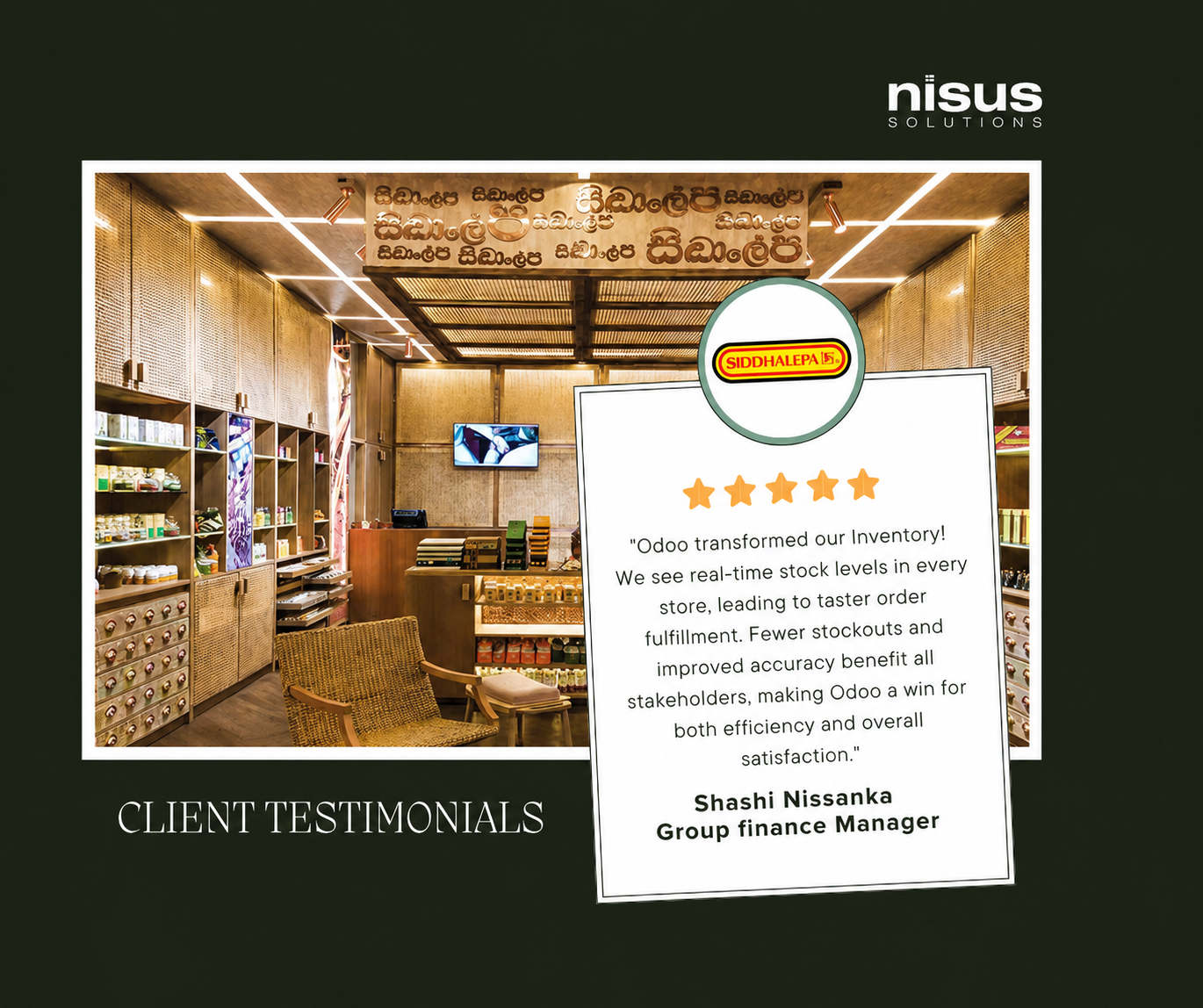
The Inventory module enhances stock accuracy and operational efficiency by providing real time tracking of stock movements. It also reduces excess inventory and minimizes capital being tied up in slow-moving or obsolete items. - Integrated Quality Assurance
The Quality module embeds standardized inspection points directly into operational workflows, ensuring consistent product quality, reducing defects, and strengthening compliance with internal and external standards. - Financial Transparency (Invoicing)
The Invoicing module connects operational processes with financial management, offering clear visibility into receivables, payables, and overall cash flow, enabling more accurate financial control and planning.
The implementation of Odoo V14 initially significantly transformed Hettigoda Industries by replacing fragmented legacy systems with a unified, integrated, multi-company ERP ecosystem. This transformation reengineered core business processes, eliminated operational redundancies, and enabled real-time reporting through advanced analytics and pivot-based insights.
Following the successful stabilization and optimization of the system, the platform was later migrated and upgraded to Odoo V18, ensuring continued performance improvements, enhanced functionality, and long-term system scalability.
By empowering users with self-service reporting and greater control over system functionalities, the organization has reduced dependency on technical teams, improved responsiveness, and enabled faster, data-driven decision-making while lowering overall administrative overhead.
Operationally, the solution has strengthened the company’s adherence to international quality standards by embedding structured control points and automated alerts within production and operational workflows. Enhanced inventory capabilities—such as item aging analysis and expiry tracking—have reduced waste and improved stock utilization across the product portfolio.
In addition, optimized procurement processes have improved vendor management, cost efficiency, and purchasing discipline. Collectively, these improvements have streamlined internal operations, strengthened financial transparency, and enhanced service delivery, enabling the company to remain competitive while expanding its presence across more than 25 international markets.